THE STORY
BEHIND THE FRAME.
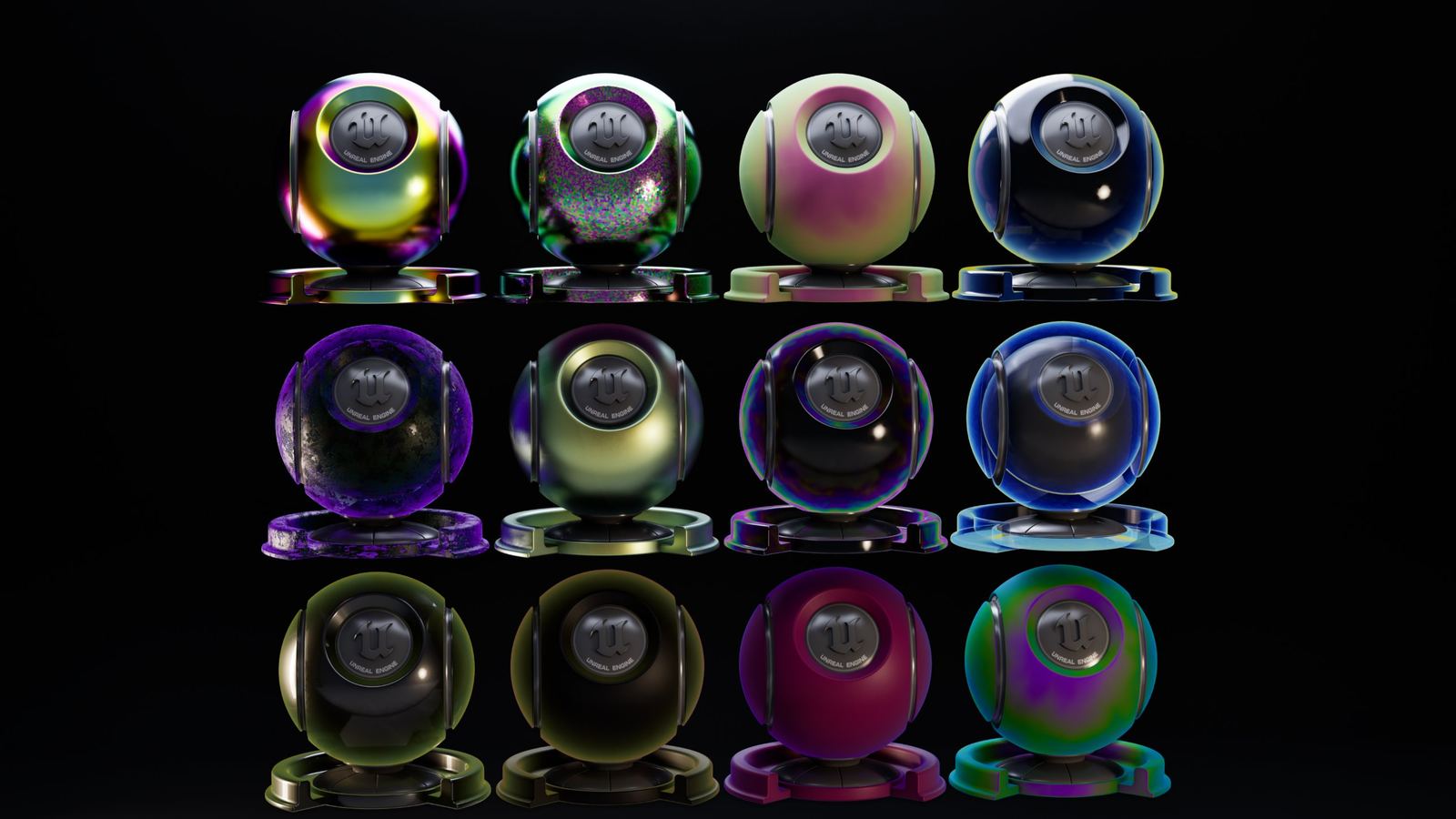
Real iridescent cloth is coated, fragile and expensive by the meter, and it never catches light the same way twice. Our founder spent years sourcing it by the box for her collections. The studio set itself one brief: build twelve iridescent fabrics that a character artist can put on any garment in Unreal Engine and trust under any light, at any distance, in every engine version from 5.3 to 5.8, without switching on Substrate.
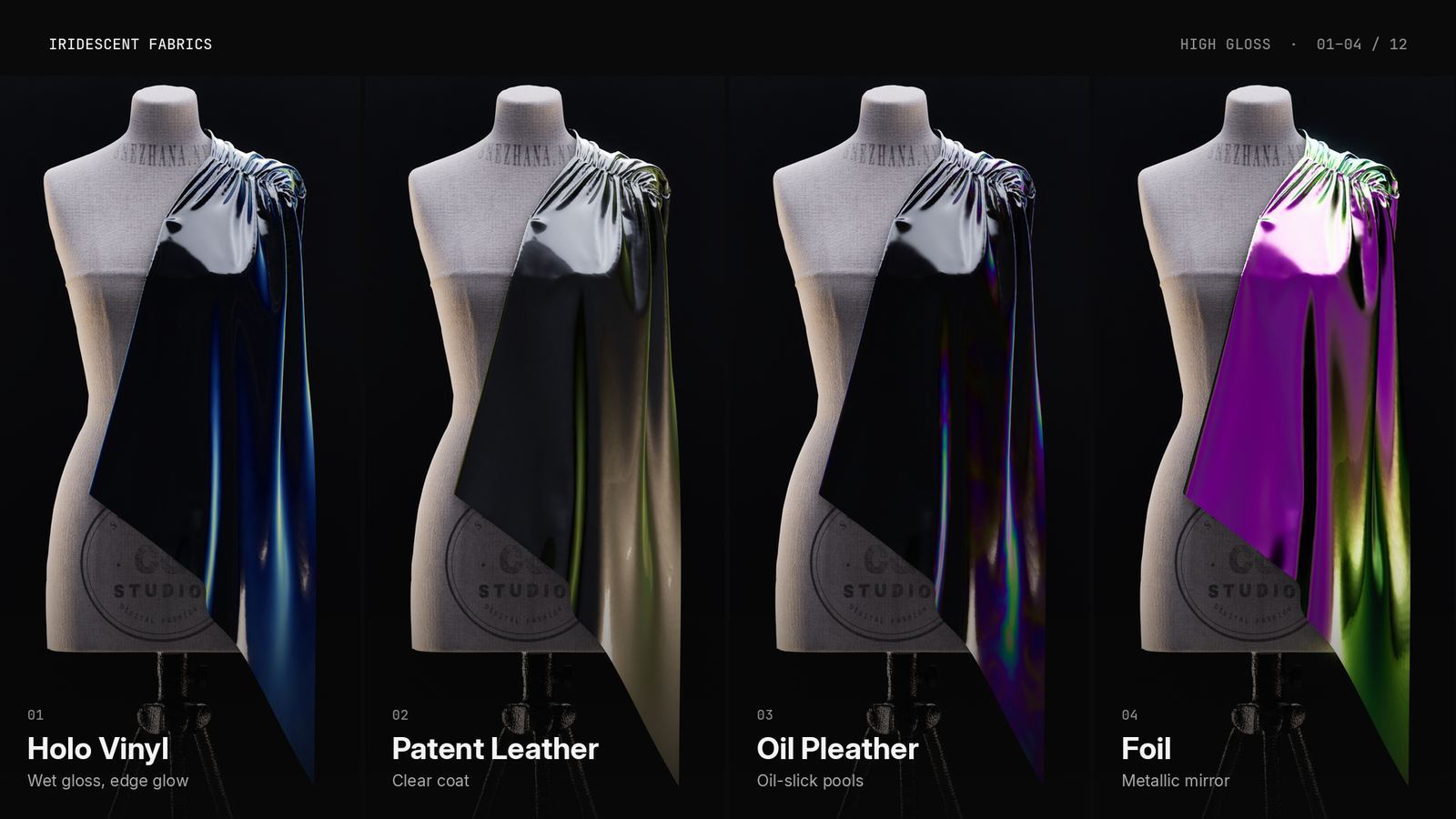
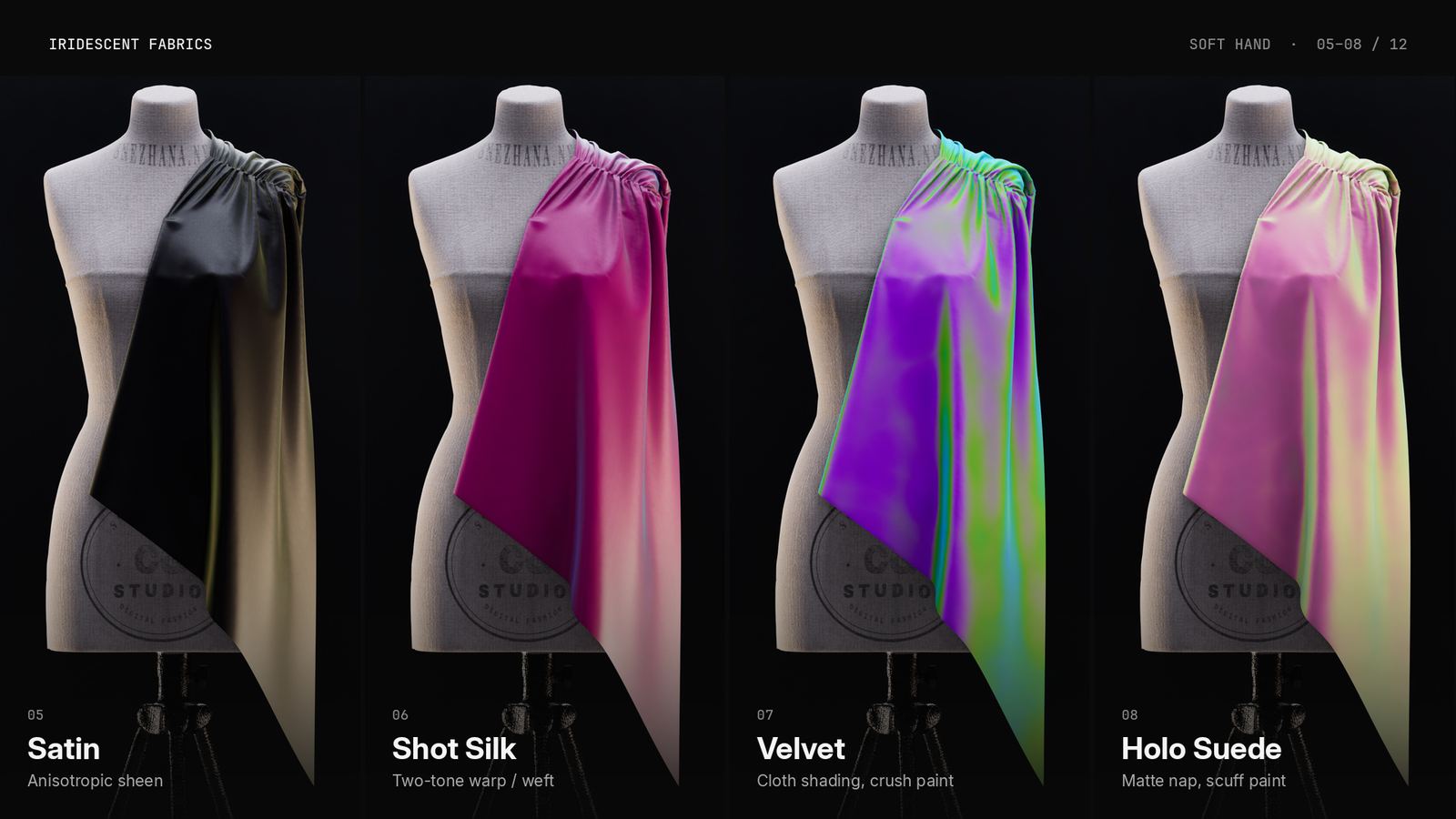
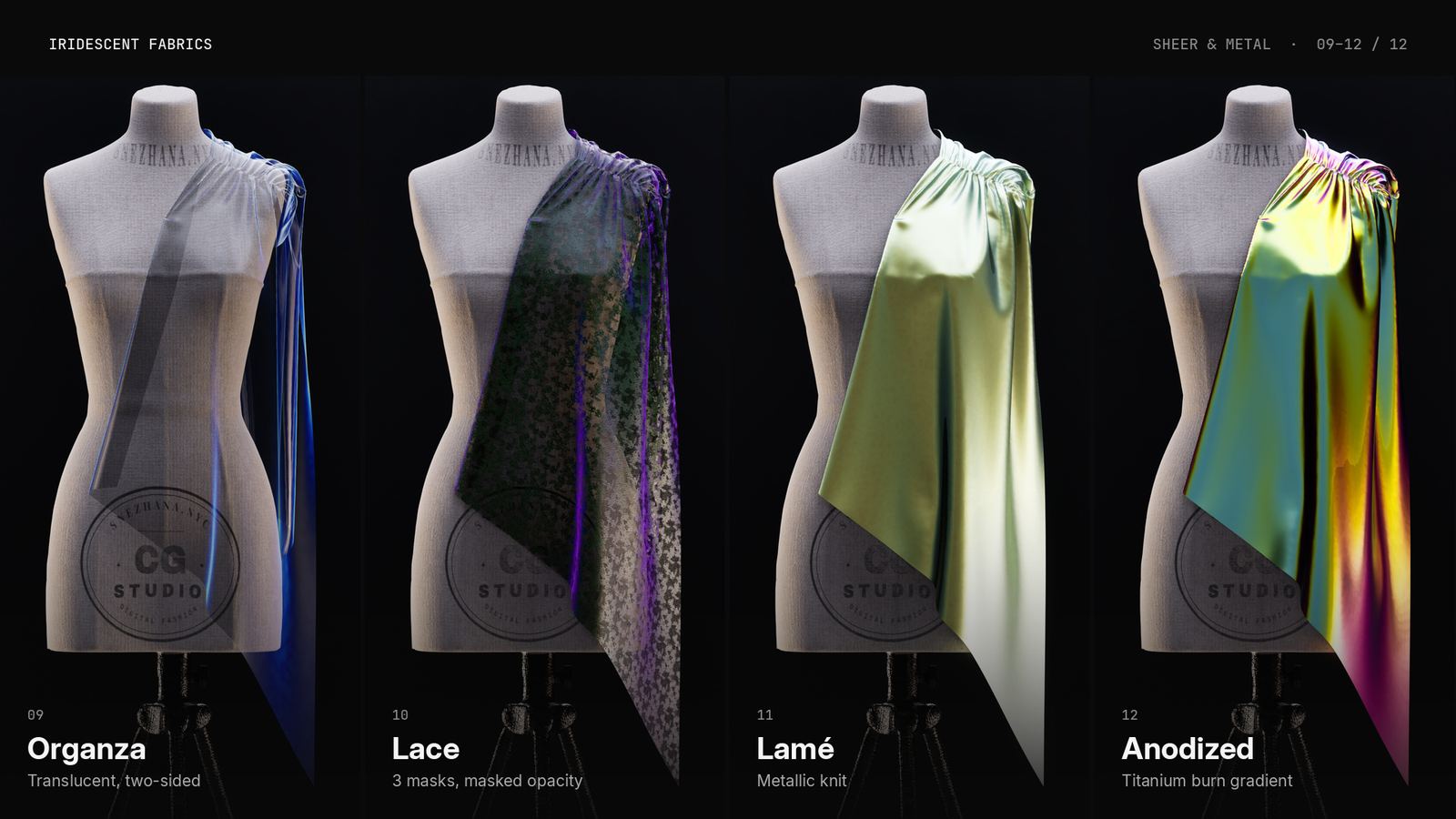
We treated the color as physics rather than paint. At the core is a six-wavelength thin-film interference model built from stock material nodes. The hue comes from film thickness in nanometers and the viewing angle, so it holds under any lighting setup. Scale is set in real centimeters instead of a UV multiplier, so a 6 cm weave measures 6 cm on a sleeve or a curtain. Every preset was tuned against photographs of real cloth, from shot silk to patent leather. Opaque, translucent and masked fabrics run on five separate master materials, so a scene pays only for the path it uses. The three lace patterns, an orchid floral, an art deco geometric and an open net, were generated procedurally from scratch, each with a matching normal map.
Iridescent Fabrics went live on Fab. It ships twelve presets on five master materials, three lace masks, a buyer guide and a twelve-station gallery map with every fabric on the studio's own dressform. It is tested and working in Unreal Engine 5.3 through 5.8, and it takes the buyer's own normal maps, so the color breaks along their threads.